Finding my voice: How acupuncture helped me take back control of my health journey
Finding my voice: Living with chronic illness can be exhausting, particularly when symptoms are complex, unpredictable and difficult to explain. For a 57-year-old woman from Nottinghamshire, finding a trusted acupuncturist has brought something she hadn’t expected – not just support with her physical symptoms, but the confidence and energy to keep seeking answers about her health.
As part of Acupuncture Awareness Week 2026, we’re sharing her experience of how traditional acupuncture has helped her feel heard, supported and empowered to take a more active role in her healthcare.
Living with the uncertainty of chronic illness
Living with ME/CFS and postural orthostatic tachycardia syndrome (POTS), alongside longstanding migraines, has brought significant challenges.
Symptoms including debilitating fatigue, brain fog and changes in heart rate and blood pressure have affected her daily life and ability to work. Managing ongoing investigations and medical appointments has also taken its toll.
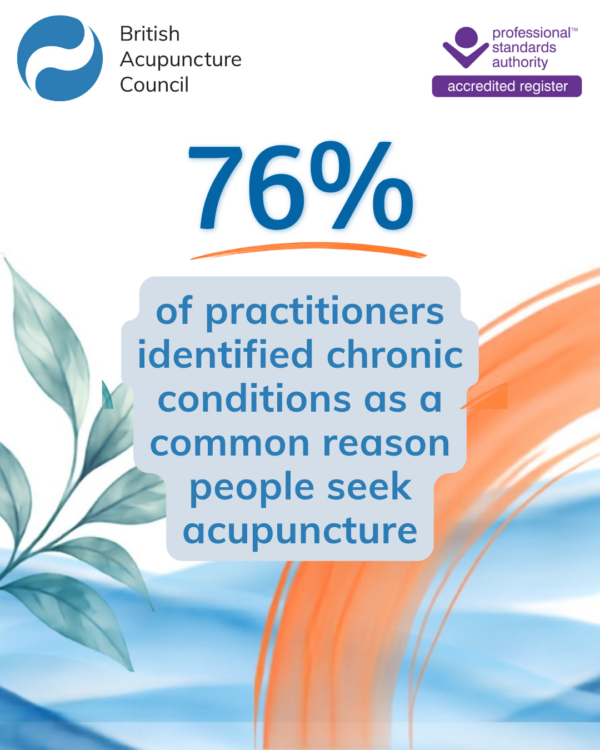
Her experience reflects a wider picture. In the British Acupuncture Council’s 2026 practitioner survey, 76% of respondents identified chronic conditions as a common reason people seek acupuncture, highlighting the importance of supporting patients managing ongoing health challenges.
Finding more than she expected
Having previously used traditional herbal medicine, she was familiar with the principles of traditional Chinese medicine. When looking for an acupuncturist, professional qualifications and membership of a recognised professional body were important to her.
That’s how she found British Acupuncture Council (BAcC) Member Hannah Charles MBAcC.
“I really thought I’d just go and lie on a table and have needles put into me. I hadn’t thought about the relationship or how much of an impact that could have.”
But it was that relationship that became one of the most valuable aspects of her care.
“When you have a chronic illness, it’s rare to find somebody who really understands. Going to Hannah is a lovely, safe space where I can actually be ill. I can be myself, however I’m feeling that week, and she accepts that.”
For Hannah, this trusting relationship is fundamental to supporting patients with long-term conditions.
“Listening deeply and building a strong therapeutic relationship is just as important as the acupuncture itself,” she explains.
Like many traditional acupuncturists, Hannah considers the whole person rather than focusing solely on individual symptoms. Although she develops a treatment plan, she adapts each appointment according to how her patient is feeling, their energy levels and her clinical findings, including traditional pulse assessment.
The patient now attends regular acupuncture appointments and feels that treatment has helped her manage her migraines and some of the physical challenges associated with her conditions.
Her experience reflects some of the wider benefits reported in the BAcC’s 2026 patient survey, where 52% of respondents reported improved energy levels and 50% reported better sleep following acupuncture.
Finding the confidence to keep going
For someone managing multiple symptoms, medical appointments and ongoing investigations, knowing what to prioritise can feel overwhelming. Through their conversations, Hannah has helped her organise her thoughts, identify her most pressing concerns and prepare for appointments with other healthcare professionals.
“She’s really helped me to know what I need, how to phrase it and where to spend the limited energy I have.”
Importantly, Hannah’s support has never been about replacing conventional medical care. Instead, she has encouraged her patient to continue seeking appropriate investigations and referrals.
“Acupuncture works best as part of an integrated approach to health, complementing rather than replacing medical care,” Hannah explains.
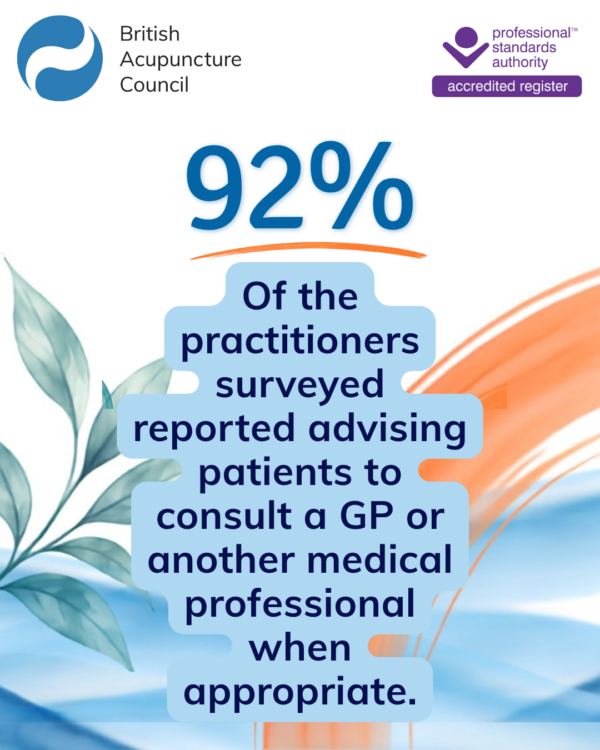
This collaborative approach is reflected in the BAcC’s 2026 practitioner survey, where 92% of respondents reported advising patients to consult their GP or another medical professional when appropriate.
For this patient, that support has helped transform the way she approaches her healthcare.
“I feel way more empowered now. Instead of everything being overwhelming, I’ve been able to focus. I can go into an appointment and say, these are the three things I need to talk about today.”
Hannah sees this sense of empowerment as an important part of traditional acupuncture care, helping patients feel actively involved in decisions about their well-being and ongoing treatment.
What does the research say?
There is established evidence supporting acupuncture for certain symptoms, including migraine. NICE guidelines recognise acupuncture as an option for migraine prevention when specific preventive medicines have been unsuccessful, are unsuitable or cannot be tolerated.
Research into acupuncture for ME/CFS is less conclusive, although a 2026 systematic review of eight randomised controlled trials involving 715 participants reported promising findings for fatigue. The researchers highlighted the need for further high-quality studies.
While acupuncture is not an established treatment for POTS itself, her experience highlights the value she places on support for her individual symptoms and overall well-being alongside ongoing medical care.
A different kind of transformation
Although her medical journey is ongoing, she feels acupuncture has made a profound difference to her life. She isn’t expecting Hannah to cure her conditions. Instead, their relationship and the support she receives help her regain a sense of control.
“I’ve taken back control over my life, my health in particular. I’ve found my voice, and Hannah has allowed me not only to find my voice, but to amplify it.”
And perhaps that’s the most powerful part of her experience.
“If I don’t get any answers, I will know that I’ve tried. With Hannah’s support, I feel that I can explore every possible avenue.”
Sometimes transformation isn’t about recovery or finding a cure. It’s about feeling heard, finding your voice and having the strength and confidence to keep seeking answers.
About Hannah Charles Lic Ac MBAcC
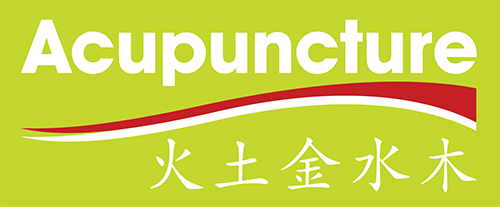
Hannah is a BAcC Member and a traditional Five Element acupuncturist practising at Southwell Acupuncture Clinic in Nottinghamshire.
Her approach centres on creating a safe, supportive environment where patients feel listened to and understood. She tailors each treatment to the individual’s changing needs, recognising the importance of the therapeutic relationship alongside acupuncture itself.
Hannah also encourages appropriate medical investigations and believes in working collaboratively with conventional healthcare professionals to support patients in managing their health and well-being.
Hannah practises at Southwell Acupuncture Clinic, Nottinghamshire.
Find out more: www.southwellacupuncture.co.uk
Find a qualified acupuncturist
BAcC Members undertake degree-level training in traditional acupuncture and are committed to high standards of professional practice, ethics and ongoing development.
The BAcC holds accreditation from the Professional Standards Authority (PSA), helping the public identify practitioners who meet recognised professional standards.
Find out what makes our members the most trusted professional acupuncturists in the UK at acupuncture.org.uk
This is one patient’s personal experience. Acupuncture is not a cure for ME/CFS or POTS, and individual responses vary. It should complement, rather than replace, appropriate medical care.
Acupuncture Treatment with Hannah
For acupuncture help treatment and care contact Hannah Charles LicAc MBAcC at:https://www.southwellacupuncture.co.uk/contact/
Hannah Charles is a founding member of the British Acupuncture Council (MBAcC)
The BAcC is an advocate for traditional acupuncture professionals and maintains the highest professional standards to protect the general public. BAcC members are registered on an accredited register, regulated and approved by the Professional Standards Authority for Health & Social Care (PSA). For More information, see the website: https://acupuncture.org.uk
10 November 2026 Acupuncture Awareness Week
By Sandra Hart-Hunt, British Acupuncture Council, Communications Manager